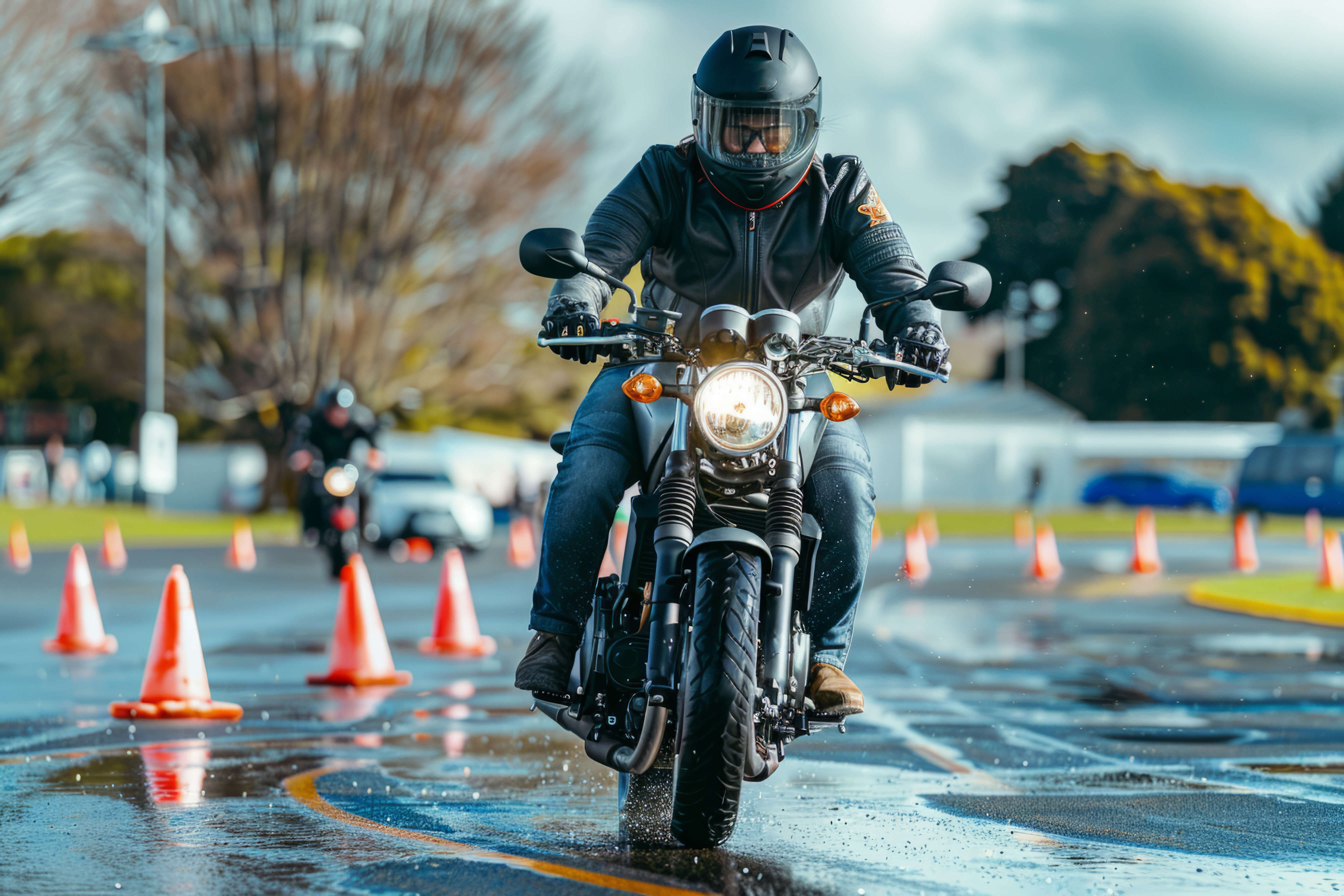
Ontario Motorcycle Road Test Guide: M1, M2 & Full M
Preparing for your Ontario motorcycle road test? Learn about the M1, M2 and full M licensing process, road-test skills, motorcycle requirements and practical ways to prepare for test day.
Ontario Motorcycle Licence Levels
M1 to M2 Motorcycle Road Test
The first motorcycle road test focuses heavily on your ability to control the motorcycle safely and demonstrate basic riding techniques.
Riders should be comfortable operating the motorcycle at both slow and normal road speeds while maintaining balance, observation and control.
Skills You Should Practice
- Starting and stopping smoothly
- Slow-speed motorcycle control
- Balance and steering
- Controlled braking
- Turning safely
- Proper signalling
- Mirror checks
- Shoulder and blind-spot checks
- Correct lane positioning
- Following Ontario traffic rules
Low-Speed Motorcycle Control
Low-speed control is an important part of motorcycle riding. Practice keeping your motorcycle balanced while moving slowly, steering smoothly and maintaining control without unnecessary foot contact with the ground.
Controlled Braking
You should understand how to use your motorcycle's brakes progressively and safely. Practice stopping in a controlled manner while keeping the motorcycle stable.
M2 to Full M Motorcycle Road Test
The Level Two motorcycle road test is more advanced. It evaluates how safely you operate your motorcycle in real-world traffic situations.
During this stage, you should demonstrate consistent observation, safe lane positioning, appropriate speed, good judgement and proper interaction with other road users.
Skills Commonly Assessed
- Traffic observation
- Mirror checks
- Blind-spot and shoulder checks
- Lane positioning
- Safe following distance
- Intersections
- Left and right turns
- Lane changes
- Traffic signals and signs
- Speed management
- Hazard awareness
- Higher-speed and freeway riding when applicable
Observation Is Extremely Important
Motorcycle riders need to continuously monitor the road, surrounding traffic and potential hazards.
During your test, make your observation habits clear and consistent. Check mirrors regularly and perform appropriate shoulder checks before changing your road position.
Remember Before Changing Position
- Check your mirrors.
- Signal your intention.
- Check your blind spot.
- Confirm that the movement can be completed safely.
- Move smoothly into the new position.
Motorcycle Lane Positioning
Unlike a car, a motorcycle can use different positions within a traffic lane. Your position should provide good visibility, adequate space and an appropriate safety margin from hazards.
Avoid automatically riding in exactly the same tire-track position in every situation. Road conditions, traffic and surrounding hazards can affect the safest position.
Highway & Freeway Riding for the Full M Test
For applicable full M tests, riders should be prepared for higher-speed riding and freeway situations.
Practice These Highway Skills
- Entering an acceleration lane safely
- Building speed appropriately
- Checking mirrors
- Performing a blind-spot check
- Signalling before merging
- Finding a safe opening in traffic
- Merging smoothly
- Maintaining adequate following distance
- Changing lanes safely
- Exiting the freeway smoothly
What to Bring to Your Motorcycle Road Test
- Your valid Ontario motorcycle driver's licence
- An appropriate motorcycle for the test
- An approved motorcycle helmet
- Corrective lenses if required by your licence
- Any other documents required for your particular test
Make Sure Your Motorcycle Is Roadworthy
Before test day, inspect your motorcycle carefully. A mechanical or safety problem may prevent you from completing your scheduled test.
| Item | What to Check |
|---|---|
| Brakes | Front and rear brakes operate correctly. |
| Lights | Headlight, brake light and required lights work. |
| Signals | Turn signals function properly. |
| Tires | Proper condition and suitable inflation. |
| Mirrors | Secure and correctly adjusted. |
| Horn | Operating correctly. |
Common Motorcycle Road Test Mistakes
Many test problems are caused by inconsistent observation, positioning or motorcycle control rather than one complicated manoeuvre.
- Missing shoulder checks
- Not checking mirrors frequently enough
- Forgetting to signal
- Leaving a signal activated unnecessarily
- Poor lane positioning
- Following vehicles too closely
- Unsafe or unnecessary speed changes
- Weak low-speed motorcycle control
- Stopping without smooth control
- Failing to scan intersections for hazards
How to Prepare for Your Ontario Motorcycle Test
Preparation should combine knowledge of Ontario motorcycle rules with practical riding experience.
1. Study the Official Motorcycle Handbook
Review Ontario motorcycle rules, riding techniques, lane positioning, braking, traffic observation and motorcycle safety requirements.
2. Practice Low-Speed Control
Spend dedicated practice time on slow riding, balance, steering and controlled braking.
3. Practice Observation
Develop a consistent routine for mirrors, shoulder checks, intersection scanning and identifying hazards well ahead.
4. Practice in Different Traffic Conditions
Once you have the appropriate licence and experience, practice riding in a variety of legal and safe traffic environments so you become comfortable making decisions around other vehicles.
5. Take a Practice Ride Before Test Day
A practice session can help you identify areas that need improvement before your actual road test.
Ontario Motorcycle Road Test FAQs
What is the difference between M1, M2 and M?
M1 is the first level of Ontario's graduated motorcycle licensing system. M2 provides additional riding privileges after the required testing or eligible course pathway, while Class M is the full motorcycle licence.
Does the full M test include highway riding?
Highway or freeway riding can form part of the Level Two road test for a regular motorcycle. Different requirements can apply to limited-speed motorcycles and other licence conditions.
Are shoulder checks important on the motorcycle test?
Yes. Riders need to demonstrate proper observation and blind-spot awareness when changing position, turning, changing lanes and completing other applicable manoeuvres.
Should I practice before my motorcycle road test?
Yes. Practice should include motorcycle control, observation, braking, lane positioning, turns and the higher-speed riding skills appropriate for your licence level.
Prepare for Your Ontario Motorcycle Road Test
Build your confidence before test day by studying Ontario motorcycle rules and practicing safe riding, observation, braking, lane positioning and motorcycle control.